Skip to content

Changing Currents in Employment Law 2018

Recent Trends and Developments

Date: Oct. 30, 2018
Location: Washington, D.C.
Organized by: DC Bar
TELG participant: R. Scott Oswald


» To register, choose in-person or webinar.


Changing Currents is the DC Bar’s much-anticipated annual update on cutting-edge issues in employment law. Leading practitioners from both sides of the aisle will explain recent changes and advise on best practices in this fast-evolving area.

The evening event will take place at the new DC Bar headquarters, and offers 3.0 CLE credit hours. Panels include:

  • Whistleblowing After Digital Realty
  • Use of Experts in Employment Cases (Video preview!)
  • Current Trends in EEOC/MSPB Jurisprudence
  • Hot off the Presses: Changes to Wage and Hour Laws in 2018 (Video preview!)
  • How the #MeToo Movement Is Changing the Workplace (Video preview!)

TELG’s Scott Oswald is faculty chair for Changing Currents, and he will serve as moderator for each panel. For full details, and to register, follow the links below.


» To register, choose in-person or webinar.


From ‘Crushed’ To Celebratory: The Two Sides Of The Masterpiece Cakeshop Case React

The U.S. Supreme Court’s ruling in favor of a Christian baker from Lakewood who refused to make cakes for gay weddings sparked immediate reactions from both sides of the case.

Masterpiece owner Jack Phillips was back at his bakery the day of the decision. He declined to comment on the case to reporters waiting outside. He closed up shop early to catch a plane to New York, where he’s scheduled to make media appearances, but not before serving customers and taking selfies with supporters.

George Hefner was one of the many people who came to Masterpiece Cakeshop to congratulate Phillips. For Hefner, the case came down to religious liberty and whether Christians like him can express their views in public.

“The gay community, they’re fine people I’m sure, but this crossed the fine line into someone else’s freedom. It was infringing on Jack’s freedom to believe what he believed,” Hefner said.

To celebrate, he bought a cherry cake from Masterpiece. He requested that on the top, inscribed in red icing, “God Bless America and Masterpiece Cakeshop.”

Not all of Phillips’ supporters were equally enthusiastic about the ruling, including Pastor Gino Geraci of Calvary South Denver, an evangelical church in Littleton. Geraci noted the court made its decision on narrow grounds and didn’t address bigger questions, such as how the law should balance the right to equal service with the right to religious expression.

“So again, we are still left with that thorny line: where does religious freedom end and discrimination begin? I think the lines aren’t as clearly drawn as we first had hoped,” Geraci said.

Adam Carter and client Brian Donlon at Maryland Court of Appeals

On May 2, 2018, TELG principal Adam Augustine Carter appeared before Maryland’s highest court, the Court of Appeals, to argue the case of Brian Donlon, a Montgomery County teacher who faced retaliation after blowing the whistle on dishonest actions his high school had taken to inflate its performance on a closely watched index. Adam (left) and Brian are shown here outside the courtroom, where Adam argued that, as an employee of Montgomery County Public Schools, Brian was protected by the Maryland Whistleblower Law. Video of the arguments is available here.

In Epic Systems, Gorsuch Returns Workers to Like-It-or-Lump-It Era

By R. Scott Oswald

With Justice Neil Gorsuch’s majority opinion today in Epic Systems Corp. v. Lewis, the U.S. Supreme Court revives a toxic idea that was common in workplace law before the New Deal: The fiction that an individual employee’s waiver of rights in an employment agreement, including the right to join other workers in legal actions, is a voluntary tradeoff — not an illegal power grab by the employer at its time of maximum leverage.

Barring a much-needed fix from Congress, and except in situations where unions still have sway, employees now may be forced to pursue justice by themselves on the tilted field of arbitration — even when they have endured injustice as a group.

The result must be at least threefold:

  • A gradual dwindling of concerted legal actions by employees in all forums, as more employers make individual arbitration a Gorsuch-blessed job requirement;
  • A rise in attacks on the validity of specific arbitration agreements, especially under state law as unconscionable contracts of adhesion; and
  • A systematic testing in lower courts of whether this harsh new landscape extends to claims that cannot be pursued individually as a practical matter, such as disparate-impact discrimination claims. (Surely not — but as of today, who knows?)

Meanwhile, a furious dissent from Justice Ruth Bader Ginsburg, which she read from the bench while wearing her “dissent jabot,” blasted Justice Gorsuch’s opinion as “egregiously wrong” and set the stage for more acrimonious arbitration battles at the Court this fall in New Prime Inc. v. Oliveira and Lamps Plus Inc. v. Varela.

The onward march of forced arbitration is distressing for workers, but today’s 5-4 decision at least clarified the stakes for employees in next two national elections, and may even inspire an uptick in union organization. It highlighted the need, too, for a stronger popular understanding of what’s fair and unfair in employment contracts — perhaps via a letter-grade system that allows big corporations to compete in a tight job market based on employee rights, not just employee benefits.

Willful Blindness to Reality

From its very first line, Justice Gorsuch’s opinion in Epic Systems showed his readiness to load the dice. “Should employees and employers be allowed to agree,” he asked, rhetorically, “that any disputes between them will be resolved through one-on-one arbitration?”

Perhaps that would be the question, if employees had the option of working without such an “agreement.” But when one-on-one arbitration is an ironclad condition of employment, employers offer only what Justice Ginsburg properly called a Hobson’s choice — which is to say, no choice at all.

Justice Gorsuch walked a tortuous path to his inevitably affirmative answer, holding that the National Labor Relations Act (NLRA) doesn’t grant employees an unwaivable right to act collectively in the legal arena, or perhaps any rights in that arena at all — and that anyhow, the NLRA’s wording can’t support the displacement of the earlier-enacted Federal Arbitration Act (FAA).

The FAA, signed by Calvin Coolidge in 1925, recently has become a superweapon for the U.S. Chamber of Commerce and its corporate constituency, allowing them to circumvent hard-won protections for employees and consumers with just a few sentences of take-it-or-leave it boilerplate and the illusion of a voluntary contract. In this context, Justice Gorsuch’s opinion was perhaps just the fruit of other badly decided cases dating back at least to Circuit City Stores in 2001 — when Justice Anthony Kennedy held, in another 5-4 opinion, that employment contracts weren’t immune from the FAA — and arguably all the way back to the 1980s.

Still, even as he leaned on such precedent, Justice Gorsuch appeared cold to the weight of labor history he was bucking, and to the huge stakes of protective statutes such as the NLRA. The ghost of Antonin Scalia, it seemed, steeled him as he declared Congressional intent to be irrelevant: “[L]egislative history is not the law.”

It fell to Justice Ginsburg’s dissent, therefore, to invoke what Justice Stephen Breyer called, in oral arguments for this case, the “heart of the New Deal.”

Will a Yellow Dog Still Hunt?

At 30 pages, Justice Ginsburg’s dissent was notably longer than the 25-page majority opinion. It told the story behind the statutes such as the NLRA, a story of the disproportionate power that employers once wielded over individual employees — and of a legislative scheme to fix that imbalance by enlisting the power of federal courts and by allowing workers to band together.

As Justice Ginsburg noted, employers’ rallying cry before the Great Depression had been “liberty of contract.” If workers signed away their rights — to join a union, for instance — who were Congress and the courts to interfere? But such “liberty” was wholly one-sided, and the resulting “yellow dog contracts” were reviled as coercive and unfair. The NLRA aimed to eliminate them.

The putative agreements in Epic Systems and its two consolidated cases, said Justice Ginsburg, strongly echo those of the yellow dog era. As an example, she cited the actions of Epic Systems, a Wisconsin-based software developer that e-mailed its employees an “agreement” in which they surrendered any right to collective legal action — and said, in essence, that anyone who disagreed should quit.

Such demands used to be rare: In 1992, only 2 percent of non-union companies required arbitration for the settlement of disputes. Today, emboldened by the Supreme Court’s embrace of the FAA, more than half do so. Among these, the proportion of agreements that prohibit class arbitration has doubled in just the last few years, so that individual arbitration — impractical for employees in many cases — is the only remaining channel for legal disputes for about 25 million workers.

Without a doubt, the ban on class actions will continue to spread quickly. The FAA is the new, undead face of “liberty of contract.” It seems stoppable, today, only by an act of U.S. Congress — which, in turn, seems to require a new Congress.

Remaining Options for Employees

What can employees do to protect their options? Some claims cannot easily be pursued individually, and it is hard to imagine that this Court — even steeled by Justice Scalia’s ghost — will force groups of employees to waive collective action for discrimination under statutes such as Title VII of the Civil Rights Act of 1964. That remains to be seen, however, and some brave groups must litigate the matter.

In the meantime, state contract law must become a larger battleground: Depriving employees of collective action is unconscionable from a public policy perspective, regardless of whether the Supreme Court says it violates the NLRA, as any number of states should agree.

And we can’t neglect the power of naming and shaming. Consumers and employees alike may shun companies for their unethical business practices — and restricting employees’ rights in order to enforce secrecy and increase profit is an unethical practice, make no mistake.

In today’s tight labor market, employers ought to be touting their respect for employee rights. Beyond shaming, we can honor those who set an example. What company will disavow the new “Gorsuch option”? It’s time to step up.

—–

R. Scott Oswald is managing principal of The Employment Law Group, P.C., which is based in Washington, D.C. He represents employees in disputes with their employers, but he was not involved in Epic Systems Corp. v. Lewis or its consolidated cases.

(Note: This version has been edited slightly from the version published by Law360, and carries a different headline.)

News4 interviews David Scher, attorney for Silver Line whistleblower

(Transcribed by The Employment Law Group)

Jim Handly (anchor): News4 was first to tell you about major problems with bad concrete along the second phase of the Silver Line. Well, today Metro ordered new inspections—and a lawyer representing a whistleblower is speaking exclusively to News4. Our transportation reporter Adam Tuss has the latest from Herndon tonight.

Adam Tuss (reporter): Well, this whole story just got even bigger. Regardless of the fact that the federal government is now involved, now Metro says it wants its own inspection team to come in here and take a look at all these stations and all this concrete to make sure that everything is done properly. This concrete problem along the Silver Line could be a whole lot bigger.

David Scher: It seems to me that if the company is willing to commit fraud here, you know—who knows?

Tuss: David Scher is the attorney representing a whistleblower who first raised concerns about substandard concrete that was being used in the second phase of the Silver Line. He agreed to meet News4 to talk about the case and the whistleblower, whose name is Nathan Davidheiser.

Scher: I would say that Nathan is really pleased that the United States took his case seriously, investigated it and discovered that he was right.

Tuss: Now, potentially larger issues. According to the lawsuit, the wrong type of stone was used in this project. Sources say they don’t know if that will pose future problems.

Now this has all prompted Metro to order an independent assessment of the Silver Line concrete—even though Metro isn’t building this project. Meantime, taxpayer money’s at stake, because potentially hundreds of thousands, if not millions of dollars of bad concrete has to be replaced and repaired in a project that’s still under construction.

Scher: We also want to make sure that the Silver Line is fixed, that the concrete works, that the Metro doesn’t collapse sometime in the future.

Tuss: Do you think that could happen? Are you worried about that?

Scher: Well I’m not worried about it now, because I know that the prime contractor—I know that there’s a fix going to be put in place, so. But I certainly was worried about that at the time we brought the case.

Tuss: For now, Silver Line officials [are] saying the timeline to open the project is on track. But again, more testing is coming. Along the Silver Line, Adam Tuss, News4.

» View story on NBCWashington.com

» Read Mr. Davidheiser’s amended complaint in the case

» Read the U.S. Attorney’s press release about the case


[ADDITIONAL COVERAGE]

Feds join whistleblower lawsuit over bad Silver Line concrete

Fox 5 DC (May 16, 2018)

(Transcribed by The Employment Law Group)

Shawn Yancy (anchor): We’re back with an update now to a story we’ve been following since April. The concrete manufacturer working on the Silver Line extension to Dulles Airport knew about problems with the concrete.

Jim Lokay (anchor): According to a lawsuit filed by a whistleblower, the manufacturer apparently falsified data in order to pass inspections. Fox 5’s Cori Coffin has been following this story for us. She’s live in Herndon with more. Cori?

Cori Coffin (reporter): Yeah, here at one of the construction sites. So we’re talking about concrete that’s not inside the tunnel that the trains will specifically be traveling through, but rather in surrounding buildings like this one that you see here. Now, originally the company said that there was a quick fix for this whole thing, and that it would put things back on track, but we’re now learning it could actually be more serious than that.

In April, we told you about three problems discovered with the concrete. One, too much water in the mix, which can lead to cracking. Two, not enough air in the mix as well, making it difficult for freezing water to expand and contract, also leading to cracking. And three, steel mesh not encased enough, which could expose it to air, leading to rusting.

At the time, the general contractor on the project, Capital Rail Constructors, said these issues were found during routine inspections. But according to the lawsuit unsealed today that the Department of Justice is looking into, a whistleblower reported the problems in 2015, saying they could compromise the structural integrity of the concrete.

Nathan Davidheiser worked as a lab technician in Universal Concrete Products quality control division. Upon discovering the issues, he says he was told to falsify data to pass inspection. One text exchange from quality control manager Andrew Nolan reads, “They will reject those panels. We have to change the data.”

Davidheiser also says the company knowingly used stone that was not approved for the concrete mix, which could have “potentially deleterious,” or dangerous, effects.

[To Man #1] Would you ever get on if you thought concrete might be not structurally sound?

Man #1: Absolutely not. If it’s not good, I’m not getting on it.

Coffin: We spoke to several people on the Silver Line today.

Man #2: That’s definitely a matter of concern. I mean, we —

Woman #1: We are freaked out right know. I mean, we didn’t know about that.

Coffin: It remains to be seen if the bad concrete will have to be taken out, and if that would push the project’s completion date back.

Woman #2: The public safety should come first. So if the project takes longer, then it’ll take longer.

Coffin: As for those accused of duping Metropolitan Washington Airport Authority —

Unseen Woman: The company needs to be fired. They need to be let go.

Coffin: Now, UCP is accused of defrauding taxpayers and also retaliation against employees. Tonight, nobody named in the lawsuit, including the whistleblower himself, are speaking at this point. We do know that the Department of Justice is intervening in this case, which basically means that they’re taking over on behalf of the whistleblower. Usually in these case it’s because they found enough merit with the case.

Live in Herndon, Cori Coffin, Fox 5 local news.

» View story on Fox5dc.com


Concrete for Silver Line stations is flawed, test results were doctored, whistleblower says

Excerpted from the Washington Post (May 17, 2018)

Concrete panels for several of the new Silver Line stations do not meet safety or reliability standards and were made by a company that doctored testing records and used unapproved materials to mask the flaws, according to a whistleblower lawsuit unsealed Wednesday in federal court.

The suit, filed in the U.S. District Court for the Eastern District of Virginia, alleges officials at Universal Concrete Products, based in Stowe, Pa., knew the precast concrete panels they manufactured were defective and could be prone to cracking and water erosion that could affect structural integrity. When an employee in their quality assurance department flagged the problem, the suit alleges, he was told to ignore it and later instructed to fake test data to cover up the problems.

The company made more than 1,500 panels that were used to construct exterior walls at five of the six new Silver Line stations that are part of the extension to Dulles International Airport and into Loudoun County.

Virginia and the federal government announced on Wednesday that they were joining the suit over the project being managed by the Metropolitan Washington Airports Authority.

The whistleblower, Nathan ­Davidheiser, filed the suit in March 2016, claiming he was fired from his job as a quality control lab technician at Universal Concrete Products after he continued to question problems with the company’s manufacturing process. He filed his complaint under the federal False Claims Act, which allows whistleblowers to recover a portion of any money the government recovers on behalf of defrauded taxpayers.

» View full story on WashingtonPost.com


Silver Line concrete problems flagged a year earlier in whistleblower lawsuit

Excerpted from WTOP.com (May 16, 2018)

WASHINGTON — A whistleblower lawsuit was filed more than a year before the Metropolitan Washington Airports Authority and contractor Capital Rail Constructors say they learned that defective concrete panels were installed at five new Silver Line stations.

Virginia and the federal government are joining the False Claims Act and Virginia Fraud Against Taxpayers Act lawsuit, the U.S. Attorney’s Office for the Eastern District of Virginia said Wednesday afternoon.

The suit was filed under seal in March 2016 by Nathan Davidheiser, who worked for Universal Concrete Products, the subcontractor that produced the faulty concrete panels. Davidheiser said he was directed by his employer to lie about quality control tests.

The Airports Authority and the main construction contractor, Capital Rail Constructors, reiterated to the authority board Wednesday though that they only recognized problems with the concrete panels in the first part of 2017 — a year after the lawsuit was filed.

The lawsuit triggered an investigation by the FBI and U.S. Department of Transportation Inspector General, because federal money was spent in the second phase of Silver Line construction.

» View full story on WTOP.com


Feds Join Whistleblower Lawsuit Over Bad Metrorail Concrete

Excerpted from U.S. News & World Report (May 16, 2018)

McLEAN, Va. — The Justice Department and the Virginia attorney general’s office are jumping in to a whistleblower’s lawsuit alleging a subcontractor deliberately used bad concrete on a $2.6 billion project to extend the D.C. region’s Metrorail system to Dulles International Airport.

The whistleblower, Nathan Davidheiser, is a former lab technician at Universal Concrete Products Corp. in Stowe, Pennsylvania. He filed his lawsuit in 2016 and says the company had him falsify records when testing showed the concrete failed quality tests. Specifically, the concrete’s air content was too low, making it more likely to crack, according to the suit.

The lawsuit includes copies of text messages ordering him to falsify test data on the concrete’s air content.

On Wednesday, the Justice Department announced it was joining the lawsuit, along with Virginia Attorney General Mark Herring. The decision to join the lawsuit indicates authorities believe the whistleblower’s allegations are credible.

» View full story on USNews.com

» This coverage originated with the Associated Press and also was carried by outlets including the Philadelphia Inquirer, the Chicago Tribune, the Seattle Times, the Los Angeles Times, and the Miami Herald.


DC Metro To Investigate Concrete Used On $1.8B Rail Project

Excerpted from Law360 (May 17, 2018)

Washington, D.C.’s transit authority will investigate the condition of concrete panels used in the ongoing $1.8 billion Silver Line rail project, the agency’s CEO said Thursday, days after a federal court unsealed a False Claims Act suit accusing a subcontractor of covering up shipments of subpar concrete.

Washington Metropolitan Area Transit Authority CEO Paul J. Wiedefeld said whistleblower Nathan Davidheiser’s allegations against Universal Concrete Products Corp. prompted his order that an independent contractor check out the panels. The Silver Line will connect the city’s existing rail system to Washington Dulles International Airport, and while the transit authority isn’t building the project, it will assume control when the line is finished. The first section of the extension opened in 2014 and the second, and final, phase is currently under construction.

“Based upon the recently unsealed federal complaint against Universal Concrete Products, it’s necessary for Metro to look at this with our own independent contractor to ensure whatever remedies are applied to the concrete are ultimately safe for our passengers and our employees,” Wiedefeld said. “Let me be clear: Metro is committed to ensuring that any remedies are paid for by those responsible, and that taxpayers and Metro customers are protected.”

The complaint, filed in March 2016 and unsealed Monday, claims Universal Concrete, its President Donald Faust, and its quality control manager, Andrew Nolan, intentionally made and shipped concrete that didn’t meet contractual specifications and could fall apart quickly. Davidheiser, who worked in the company’s quality control division, also said he and other employees were told to falsify data to hide problems from the government.

» View full story on Law360.com (subscription required)


Federal Government Joins Whistleblower’s Lawsuit Over Faulty Concrete in Silver Line Project

Excerpted from Reston Now (May 17, 2018)

The Justice Department and the Virginia attorney general’s office are joining a whistleblower’s lawsuit that accuses a subcontractor of intentionally using defective concrete for the $2.7 billion Silver Line project.

In 2016, Nathan Davidheiser, the whistleblower, filed the lawsuit against Universal Concrete Products Corp., alleging the company urged him to falsify records when concrete failed quality testing. Results showed concrete was prone to cracking and water erosion, according to the lawsuit.

The documents in the case, which include text messages ordering falsification of data, were unsealed Wednesday.

“Make something up and make sure it’s a good number,” one supervisor said, according to the lawsuit.

» View full story on RestonNow.com

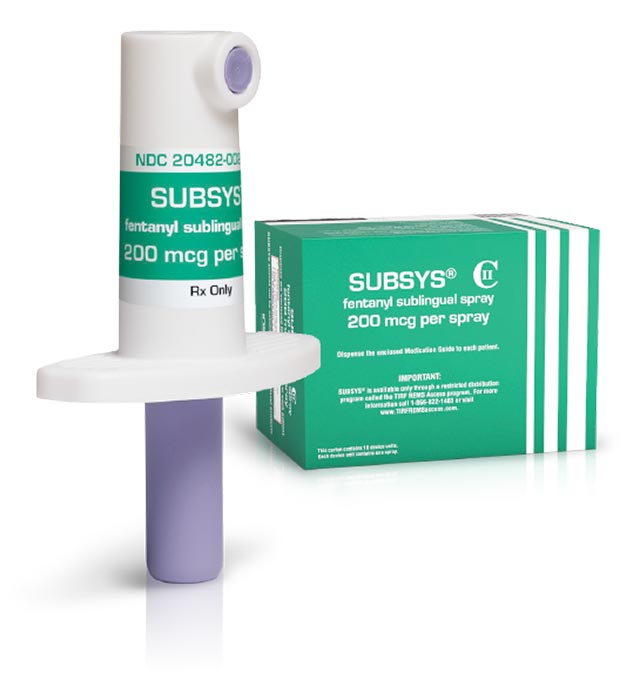
U.S. and 5 States Add Firepower to Whistleblower’s Claims Against Insys Therapeutics, Marketer of Opioid Spray

Former Salesperson Sparked Prosecution of Kickback Scheme That Included Bogus Speaker Fees, Visits to Strip Clubs, Lavish Meals

‘SUBSYS’ Spray Implicated in More Than 900 Patient Deaths

———-

WASHINGTON, D.C. (May 14, 2018) — The U.S. Department of Justice and five U.S. states have stepped into a previously secret lawsuit against Insys Therapeutics, Inc., revealing for the first time the central role played by whistleblower Maria Guzman in the government’s years-long pursuit of Insys for illegally marketing a dangerous opioid spray named SUBSYS. The resulting probe has led to a series of convictions, guilty pleas, and indictments of doctors and former Insys executives — including the company’s billionaire founder, John Kapoor, who was indicted in 2017 on federal racketeering charges.

The Employment Law Group® law firm filed the case in 2013 with close help from the Law Office of Mark Allen Kleiman, making it the earliest effective complaint against Insys (NASDAQ: INSY) under the federal False Claims Act and other laws for the company’s promotion of SUBSYS. The FCA encourages individuals to blow the whistle on fraud against U.S. taxpayers — in this case, via illegal reimbursement requests to Medicare and Medicaid — but keeps their lawsuits under wraps while prosecutors investigate the claims.

The complaint, now unsealed, was filed by The Employment Law Group on behalf of Ms. Guzman, a former Insys salesperson, on behalf of the U.S. government and, as amended, on behalf of two dozen states and the District of Columbia. It laid bare a nationwide scheme by Insys to defraud Medicare and Medicaid by inducing doctors, via kickbacks that ranged from cash to favors to sex, to prescribe large doses of SUBSYS for federally insured patients who never should have received the drug, a form of fentanyl that’s designed to be sprayed beneath the tongue of people who suffer from extreme pain due to cancer. Using a mantra of “pain is pain,” Insys illegally pushed the prescription of SUBSYS for lesser “off-label” conditions such as back pain and migraines, according to the complaint. Ms. Guzman was fired in 2013 after objecting to the potentially deadly scheme.

Fentanyl is the generic name for a synthetic opioid that’s 50 times as potent as heroin, according to the U.S. Drug Enforcement Administration. SUBSYS has been named as a primary suspect in more than 900 deaths reported to the U.S. Food and Drug Administration over a five-year period, according to a recent analysis by The Palm Beach Post.

In federal court filings unsealed today, the U.S. government and five U.S. states said they would take over litigation of the major part of Ms. Guzman’s action, specifically including her claims against Insys for kickbacks; for off-label marketing of SUBSYS; and for false claims about patients’ conditions. Subject to a stay in the case, Ms. Guzman remains free to pursue her retaliation claim against Insys, as well as claims of individual liability against Mr. Kapoor and two other former Insys executives under the federal False Claims Act and its state equivalents. All three men already have been indicted on multiple counts of criminal conspiracy for the scheme that was outlined in the 2013 complaint.

The most recent version of the complaint, filed in 2016 by The Employment Law Group, alleges violations of federal law and local laws in 24 states plus the District of Columbia. California, Indiana, New York, North Carolina, and Virginia all have opted to become actively involved in the case, while most of the remaining states plus D.C. have said that Ms. Guzman may continue litigating on their behalf. A full list of the involved states, and their status in this case, is at the end of this press release.

The Justice Department intervened simultaneously in four other SUBSYS-related lawsuits filed under the False Claims Act. All four were filed after the initial complaint filed by The Employment Law Group. The FCA, originally signed into law by President Abraham Lincoln in 1863, makes it illegal to deceive the federal government for financial gain. In addition to steep penalties for violators, it includes a “qui tam” provision that allows whistleblowers to file a legal complaint on behalf of taxpayers and — if they prevail — to receive a share of the proceeds.

“Ms. Guzman is no longer the hidden hero of the Insys investigation,” said David L. Scher, a principal of The Employment Law Group. “Now everyone knows that she was an early warrior against fentanyl abuse, taking action to save lives long before ‘opioid crisis’ became a household phrase — even at the price of her own job.”

“All the way back in 2013,” Mr. Scher said, “our initial complaint provided more than 40 pages of details for prosecutors to start pursuing. Our firm worked with Ms. Guzman to provide concrete evidence and grand jury testimony to build criminal cases against several top executives. As the FBI said when Mr. Kapoor was indicted in 2017, ‘The allegations [against former Insys leaders] of selling a highly addictive opioid cancer pain drug to patients who did not have cancer, make them no better than street-level drug dealers.’ We look forward to seeing these people face justice.”

The second amended complaint in the case, which is available here, stands as a compelling account of Ms. Guzman’s experience at Insys. In addition to outlining a fraudulent scheme against taxpayers, it alleges that Insys was a sordid and discriminatory workplace for women.

The Employment Law Group worked closely on the case with The Law Office of Mark Allen Kleiman, based in Venice, Calif.; with Assistant United States Attorney John Lee of the Central District of California; and with David Cohen, Senior Trial Counsel at the Department of Justice in Washington, D.C.

Case Information

United States ex rel. Guzman v. Insys Therapeutics, Inc.
No. CV 13-5861
U.S. District Court for the Central District of California, Western Division
Original complaint filed on August 12, 2013
Second amended complaint filed on June 13, 2016 (available here)

Intervened in part: United States, California, Indiana, New York, North Carolina, Virginia*

Declined to intervene: Delaware, District of Columbia, Florida, Georgia, Illinois, Louisiana, Massachusetts, Michigan, Montana, Nevada, New Hampshire, New Jersey, New Mexico, Oklahoma, Rhode Island, Tennessee, Texas, and Washington**

No decision so far: Hawaii, Minnesota

*The judge in the case consolidated all five SUBSYS-related actions, and Colorado intervened in part in the consolidated action. The state was not a party to Ms. Guzman’s action, however.

**Likewise, Connecticut, Iowa, Maryland, and Vermont declined to intervene in the consolidated action, and Maryland’s claims were dismissed as a result, but none of these states was named in Ms. Guzman’s action.

—————–

About The Employment Law Group

The Employment Law Group® law firm represents whistleblowers and other employees who stand up to wrongdoing in the workplace. Based in Washington, D.C., the firm takes cases nationwide.